Frustration in Teenage Dogs: Why It Happens and How to Help
Has your once well-behaved puppy suddenly started barking, pulling on the lead, ignoring cues, or biting the lead?
If so, you’re not alone. Frustration in teenage dogs is one of the most common concerns I hear from owners. It can feel as though your dog has forgotten everything you’ve taught them, but the reality is very different.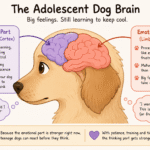
During adolescence, your dog’s brain is undergoing significant development. Hormone surges and changes within the brain affect emotions, impulse control and decision-making. Understanding what’s happening can make this challenging stage much easier to navigate.
What Causes Frustration in Teenage Dogs?
Frustration is an emotional response that occurs when your dog can’t achieve something they want. During adolescence, this emotion becomes much harder for them to regulate because the areas of the brain responsible for emotional control are still developing.
This means your teenage dog may react more intensely than they would have as a puppy or as they will as a mature adult.
Common signs of frustration in teenage dogs include:
- Lead reactivity
- Ignoring previously learned cues
- Over-arousal
- Mouthing or nipping
- Jumping up
- Barking or lunging
Although these behaviours can be frustrating for us, they are usually signs that your dog is struggling with their emotions rather than deliberately being naughty.
Lead Reactivity During Adolescence
One of the most noticeable signs of frustration in teenage dogs is developing lead reactivity.
Your dog may suddenly begin:
- Pulling towards other dogs or people
- Barking or growling
- Lunging at cyclists, runners or vehicles
- Chasing moving objects
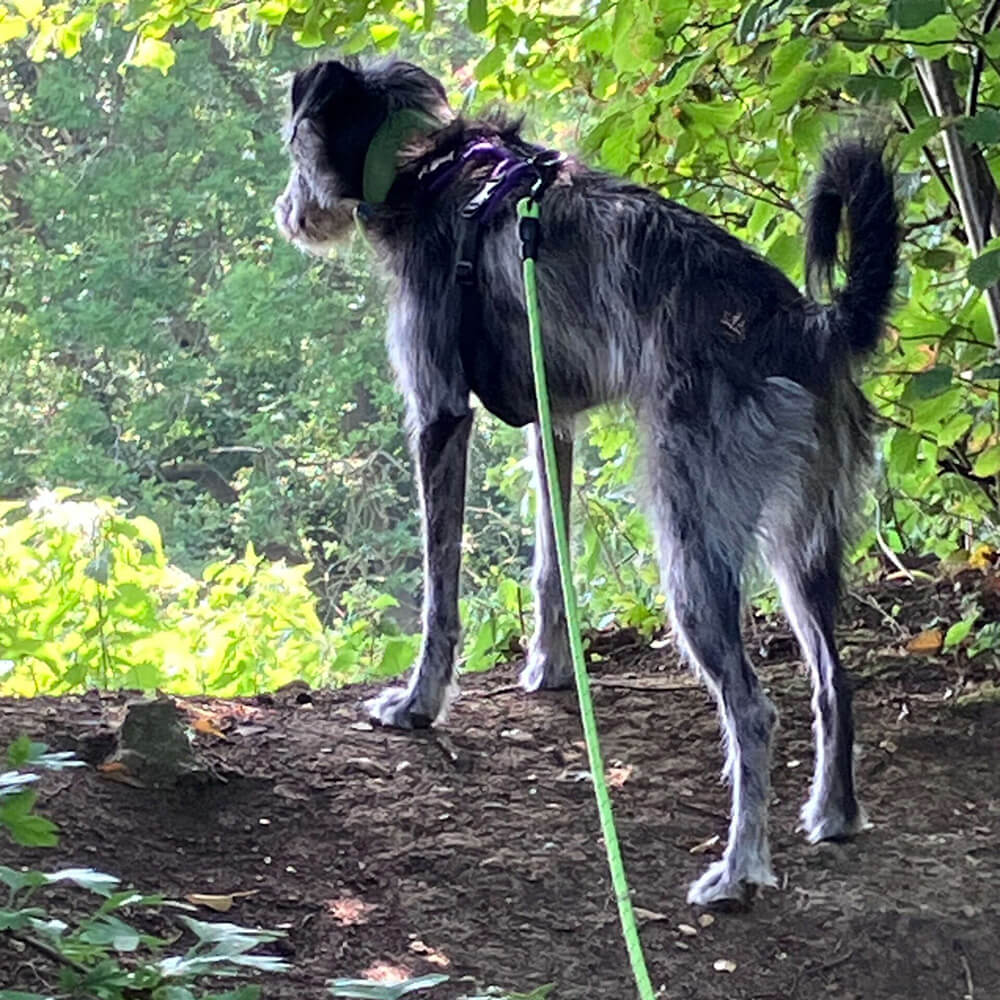
I experienced this myself with my own Collie-Whippet cross Lurcher. At around eight months old, he developed a habit of chasing cars and one morning he actually pulled me into a busy road. It was frightening.
Working with a qualified behaviourist helped me understand what was driving the behaviour and taught me how to redirect his attention before he became overwhelmed. With consistent training and management, he learned that passing cars weren’t something he needed to react to.
The important lesson is this: these behaviours are very treatable, but the earlier you address them, the easier they are to change.
“My Dog Isn’t Listening!”
Many owners tell me:
“He knows this cue. He’s just ignoring me.”

In most cases, your dog isn’t being stubborn.
During adolescence, changes within the prefrontal cortex (responsible for self-control and decision-making) and the limbic system (the emotional centre of the brain) make it much harder for dogs to think clearly when they’re excited or frustrated.
Before assuming your dog has forgotten their training, ask yourself:
- Am I giving the cue exactly the same way every time?
- Is my body language consistent?
- Is the environment more distracting than usual?
I recently had some of my own training videos analysed. Even though my dog is now an adult, it highlighted how easy it is to accidentally confuse our dogs through subtle changes in posture or movement.
Sometimes the best approach is simply to go back a few steps and teach the behaviour as though it’s brand new, using plenty of high-value rewards.
Your dog hasn’t forgotten.
Their teenage brain simply needs a little extra support.
Over-Arousal: When Emotions Overflow
Teenage dogs often struggle to regulate excitement.
This over-arousal can appear as:
- Biting the lead
- Mouthing hands or clothing
- Nipping when over-excited or tired
- Jumping up at people
Lead Biting
Lead biting often becomes a game because the lead is moving and exciting.
Some owners find it helpful to attach a second lead. If the dog grabs one lead, you can calmly drop it and continue walking using the second. In a secure area, simply dropping the lead altogether can sometimes remove the excitement and break the cycle.
Mouthing and Nipping
Many adolescent dogs become mouthy when they’re overtired or emotionally overwhelmed.
If you can redirect them onto a suitable toy before they begin, that’s ideal.
If not, the most effective response is often to stand completely still, avoid interacting, and become as uninteresting as possible. Movement usually makes the game more exciting.
Jumping Up
Jumping is one of the easiest behaviours to accidentally teach.
Think back to when your puppy was tiny.
They stood on their back legs…
You smiled.
You stroked them.
Perhaps you picked them up.
Without realising it, you rewarded the behaviour.
As your puppy grows into a much larger adolescent, jumping quickly becomes less appealing!
Fortunately, dogs learn just as quickly that keeping all four paws on the floor earns attention, food, toys or affection.
Consistency is key.
You’re Not Failing Your Dog
One of the hardest parts of adolescence is wondering whether you’ve done something wrong.
It can genuinely feel as though your lovely, obedient puppy has turned into a completely different dog overnight.
The good news?
You’ve probably done nothing wrong at all.
Your dog is simply experiencing one of the biggest developmental changes of their life.
How you respond during this stage can have a huge influence on the adult dog they become.
How to Handle Frustration in Teenage Dogs
Use Positive, Reward-Based Training
When progress feels slow, it’s tempting to become stricter.
However, punishment and aversive training methods may suppress behaviour temporarily without addressing the underlying emotion.
Research shows they can increase stress, reduce trust and, in some dogs, increase the likelihood of aggressive responses.
Instead, focus on rewarding the behaviours you do want to see.
Build Frustration Tolerance Gradually
Frustration itself isn’t the enemy.
Learning how to cope with frustration is an important life skill for both humans and dogs.
Think about sitting in a traffic jam.
Your first emotion is probably frustration because the situation is outside your control.
You could hit the steering wheel—but it won’t make the traffic move.
Instead, you might check your sat nav for an alternative route or simply accept the delay.
That’s frustration tolerance.
Our dogs need to learn the same skill through small, carefully managed experiences that allow them to succeed without becoming overwhelmed.
Prioritise Mental Enrichment
One of the biggest mistakes owners make is trying to exercise frustration away.
An extra-long walk or another game of ball chasing often increases arousal rather than reducing it.
Instead, focus on activities that engage your dog’s brain.
Scent work, sniffing games, puzzle feeders and gentle enrichment encourage calm behaviour while satisfying your dog’s natural instincts.
Sniffing activates large areas of the canine brain and is associated with the release of dopamine—the neurotransmitter linked to curiosity, motivation and positive emotional states.
For many teenage dogs, using their nose is far more relaxing than another high-energy adventure.
The Takeaway
Frustration in teenage dogs is completely normal. It doesn’t mean your dog is being difficult, dominant or deliberately ignoring you.
Their brain is developing, their hormones are changing, and they’re learning how to manage big emotions.
With patience, positive training, appropriate enrichment and realistic expectations, most adolescent dogs grow into calm, confident adults.
Remember: this stage won’t last forever—but the habits you build together during adolescence can last a lifetime.
Need Help With Your Teenage Dog?
If your adolescent dog suddenly seems to have forgotten everything they’ve ever learned, you’re not alone.
Every teenage dog is different, which is why I offer personalised support tailored to your dog’s individual needs.
Together, we can create a practical plan that supports your dog’s physical, emotional and behavioural development—helping both of you move beyond simply surviving adolescence and start truly thriving.