
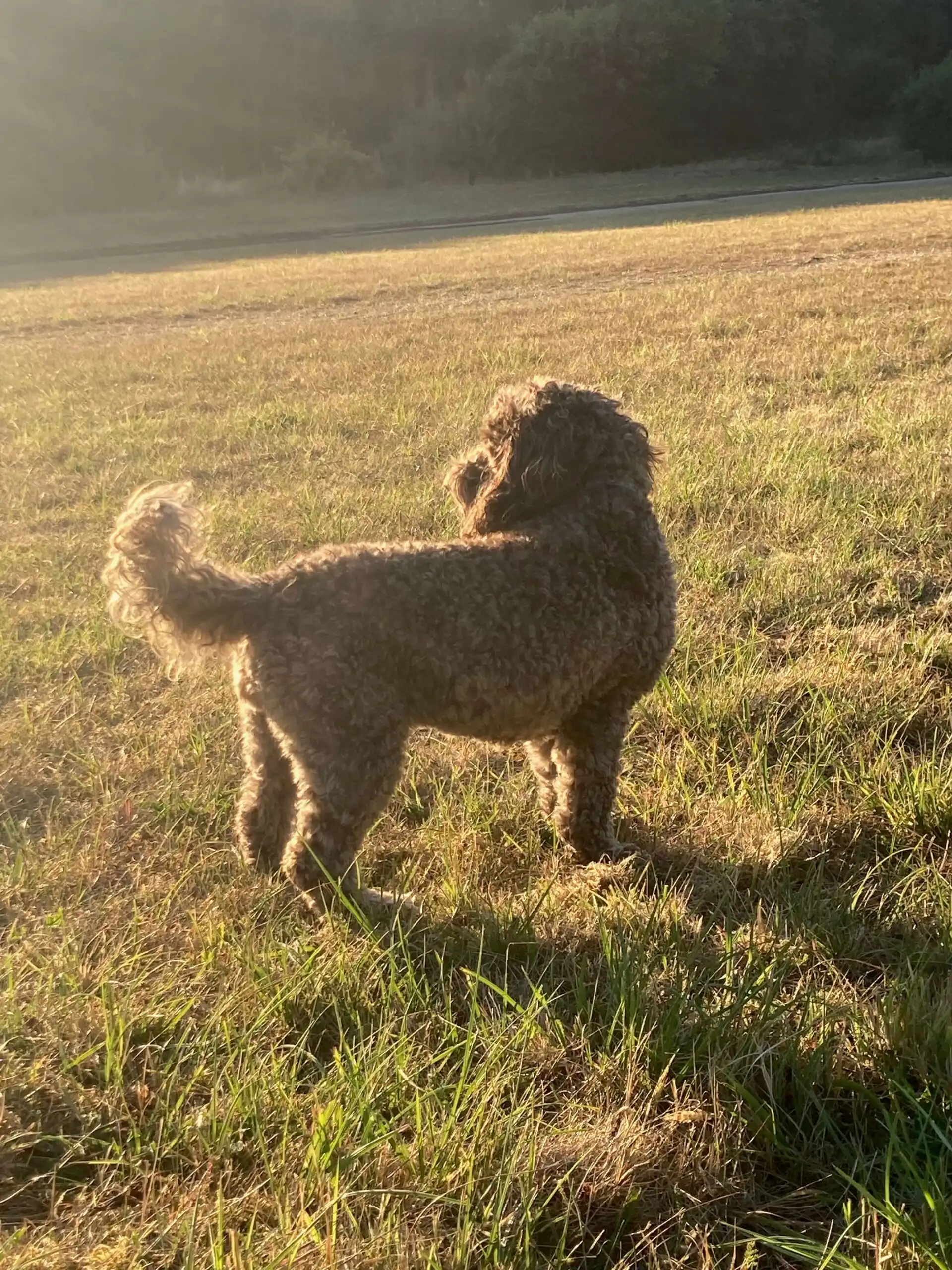
How Much Exercise Does a Teenage Dog Need?
Exercise during adolescence is a question that many owners ask me about. If you have a teenage dog, you may have wondered whether you’re exercising them enough—or perhaps too much.
Understanding exercise during adolescence is crucial for your dog’s development.
Many owners believe that a dog who seems full of energy simply needs longer walks or more intense exercise.
Yet despite increasing their dog’s activity, owners find their adolescent dog becoming even more excitable, struggling to settle at home, or appearing constantly “on the go.”
With our first dogs I certainly thought that another walk was the answer to a teenage dog having too much energy, but time and experience has taught me that an over-tired teenage dog is similar to an over-tired child who cannot settle, has a short fuse and struggles to relax.
The truth is that finding the right balance of exercise during adolescence is far more important than simply doing more to ensure your dog’s well-being.
Exercise during adolescence not only promotes physical health but also supports behavioural balance.
Why Teenage Dogs Are Different
Adolescence is a period of enormous physical and emotional development. Depending on breed and size, this stage typically begins around six months of age and continues until 18–24 months.
Understanding the specifics of exercise during adolescence will help you cater to your dog’s needs effectively.
Integrating exercise during adolescence helps prevent behavioural issues later in life.
During this time your dog is:
- Growing physically
- Experiencing hormonal changes
- Developing emotionally
- Learning how to regulate excitement
- Becoming more independent
- Discovering the world with increasing confidence
This means their exercise needs are different from both young puppies and fully mature adult dogs.
More Exercise Isn’t Always Better
It’s easy to assume that a tired dog is a well-behaved dog.
However, continually increasing physical exercise can sometimes create the opposite effect.
Keep in mind that exercise during adolescence can shape your dog’s mental state.
Some adolescent dogs become exceptionally fit, meaning they require even more activity to become physically tired. At the same time, high-intensity exercise can leave them emotionally aroused, making it harder for them to relax once they get home.
If your teenage dog struggles to settle after walks, constantly demands entertainment, or seems to have endless energy, the answer may not be another mile.
Providing varied forms of exercise during adolescence keeps your dog stimulated and content.
Instead, they may need a better balance between physical activity, mental enrichment and rest.
What Type of Exercise Does a Teenage Dog Need?
Healthy exercise isn’t just about distance walked.
A well-rounded exercise routine should include several different elements.
Physical Exercise
Physical activity keeps muscles, joints and the cardiovascular system healthy.
Examples include:
- Walks at your dog’s pace
- Off-lead exploration where appropriate
- Gentle hill walking
- Swimming (if your dog enjoys it)
- Playing with other suitable dogs
- Short games of fetch in moderation
Rather than focusing on the number of miles, think about the quality of the experience.
Don’t Forget Mental Exercise
Dogs experience much of their world through their noses.
Opportunities to sniff, explore, investigate and solve simple problems can be surprisingly tiring in a positive way.
Mental exercise might include:
- Sniff walks
- Scatter feeding
- Food puzzles
- Scent games
- Freework activities
- Learning new skills
- Confidence-building challenges
Many owners are amazed that a slower walk with plenty of sniffing often leaves their dog more settled than a fast-paced power walk.
Exercise Is Only One Piece of the Puzzle
Creating a balanced routine that includes exercise during adolescence is vital for optimal growth.
Exercise should never be considered in isolation.
Teenage dogs also need:
- Adequate sleep
- Good nutrition
- Predictable routines
- Opportunities to relax
- Positive social experiences
- Appropriate training
- Time to simply be dogs
These all work together to support healthy physical and emotional development.
Signs Your Dog May Be Getting Too Much Exercise
Every dog is an individual, but potential signs that your adolescent dog may need a different balance include:
- Difficulty settling after walks
- Becoming more hyper rather than calmer
- Constantly demanding activity
- Poor focus during training
- Increased frustration
- Over-arousal around other dogs
- Difficulty relaxing at home
Sometimes reducing the intensity of exercise while increasing opportunities for sniffing, exploration and rest leads to a calmer, happier dog.
Reassessing your dog’s routine regarding exercise during adolescence can lead to improved behaviour.
How Much Exercise Does a Teenage Dog Really Need?
There is no single number of minutes that suits every adolescent dog.
The right amount depends on factors such as:
- Breed
- Age
- Size
- Physical health
- Individual personality
- Previous activity levels
- Confidence
- Lifestyle
Instead of asking, “How long should my dog walk?”, try asking:
Exploring different activities can enhance the benefits of exercise during adolescence.
- Does my dog return home relaxed?
- Can they settle afterwards?
- Are they recovering well?
- Do they enjoy the experience?
- Are we balancing physical activity with mental enrichment?
Your dog’s behaviour after exercise often tells you more than the duration of the walk itself.
Quality Over Quantity
One of the biggest shifts many owners make is moving away from measuring success by miles walked.
Instead, focus on creating experiences that allow your dog to:
- Sniff freely
- Explore safely
- Make choices
- Learn about their environment
- Build confidence
- Move naturally
- Rest afterwards
These experiences help support not only physical fitness but also emotional wellbeing.
Finding the Right Balance
Tailoring exercise during adolescence to fit your dog’s personality is essential for success.
Every teenage dog is unique.
Some need a little more physical activity, while others benefit most from slower walks, enrichment and opportunities to decompress.
Rather than trying to “wear your dog out,” aim to meet all of their needs—physical, mental and emotional. When these needs are balanced, many adolescent dogs become calmer, more focused and better able to cope with everyday life.
Ultimately, the aim of exercise during adolescence is to foster a well-rounded adult dog.
Remember, the goal isn’t to create a tired dog. It’s to help your teenage dog develop into a healthy, resilient and well-adjusted adult.
Ready to Help Your Teenage Dog Thrive?
If you’re unsure whether your dog’s exercise routine is helping or hindering their development, a bespoke adolescent dog programme can provide personalised guidance tailored to your dog’s age, breed and individual needs.
Together we can create a balanced plan that combines appropriate exercise, enrichment, relaxation and training—helping both you and your dog enjoy this challenging but rewarding stage of life.
In conclusion, prioritising exercise during adolescence will lead to long-term benefits for your dog.
Blog Enquiry
enquiries via blog posts